In the midst of manufacturing today, robot arms are changing the rules of production, blending quality, safety, and efficiency in ways that were impossible to imagine. These marvels of the mechanical realm, commonly called robot arms, are indispensable in industries worldwide driven by the urgent necessity to cut operating costs while maintaining the highest standards of quality. Robotic arms are being incorporated into production lines in order to reduce costs and increase security. We’ll look at how these revolutionary machines reshape the industrial landscape.
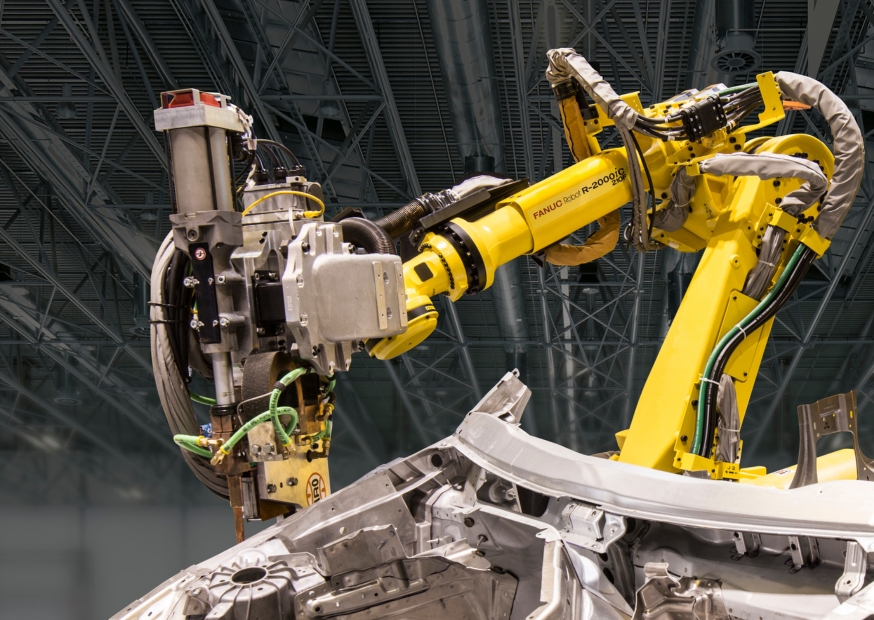
Image credit: automatedsolutions.com.au
Cost-effectiveness is driving the introduction of robotic arms around the world. The owners of factories are under constant stress to prevent the risk of injuries at work, eliminate production errors, and cut down on production waste. Robotic arms are designed to combat these challenges. Robots eliminate costly errors, and reduce waste of raw materials because they can perform repetitive tasks more precise than humans. For instance, in high-volume industries such as automotive manufacturing, robot arms perform precise welding and part placement making sure that the assembly is perfect every time. This precision results in significant savings because fewer defects means less time spent reworking, waste and rework.
Security is a key element to the advancement of robotic arms. Numerous manufacturing jobs like handling dangerous materials or operating heavy machinery pose serious risks to workers. Utilizing robot arms, enterprises can take workers away from potential danger zones. This lowers the risk of workplace injuries. Robotic arms consist of a series of movable joints that replicate the human arm’s functions. They can however operate without the danger of injuries. With programmable end effectors essentially robotic hands the machines can be used for tasks like grabbing, spinning, or welding in conditions that are unsafe for humans.
The versatility of robotic arms makes them a game-changer across diverse industries. Robots can be adapted to diverse tasks, from automotive assembly to electronic production. The programmability of these robot arms allows them to execute complex tasks like painting or applying fiberglass with a remarkable level of accuracy. When it comes to warehousing robotic arms have changed palletizing by automating the process of loading products onto pallets using precision and speed. Automation increases productivity and security because robot arms are able to work continuously and never get tired.
One of the most fascinating developments in this field is the rising popularity of collaborative robots or cobots. They work alongside human employees. Cobots equipped with robotic arms unlike conventional industrial robots that are isolated in cells, are specifically designed to be able to communicate with humans securely and effortlessly. The hands of a robot can be utilized for heavy lifting and repetitive tasks in factories, meaning humans are freed to take on more challenging duties. This collaboration enhances productivity while ensuring a safe work environment, as cobots are programmed to stop or alter their actions if a person is present.
The significance of robotic arms extends beyond safety and efficiency, to the fundamental structure of manufacturing today. They are vital to industries that require high precision for tasks like welding, assembly or even material handling. For example, in automotive production, a robotic arm can rotate and position parts during assembly, ensuring flawless alignment, without the intervention of humans. Robot arms are also used in electronics to care for delicate components. This reduces damage, and also improves the quality of output.
As industries continue to grow with the advancement of technology, the need for robotic arms will continue to grow. Their ability to lower costs, improve safety and adapt to diverse jobs makes them an essential element of manufacturing’s future. With cutting-edge technology coupled with human innovation Robot arms are not just tools they’re partners in technological advancement, driving innovation and changing how we construct our world.